
Assess the Current Level of Access
Before you can advocate effectively, you need a clear picture of the existing landscape for personalized healthcare in your country and disease area. This step helps you understand where your health system stands — its strengths, barriers, and opportunities — in terms of accessibility, reimbursement, and infrastructure for precision medicine.
What this step covers
What it is
This step helps you build an evidence-based picture of where personalized healthcare access stands in your country and disease area today.
- Country Access Snapshot — a list of criteria that has been identified as the first information that advocates and patients typically look for. This step helps you structure your access research into an overview of how personalized healthcare solutions are currently integrated into your health system
- Health System Typology Profile — following your analysis, you can obtain a simplified classification of your country's health system (e.g. nationalized vs. insurance-based)
- Priority Areas for Action — following your research, this step helps you highlight where advocacy could make the greatest impact, e.g. test reimbursement, referral networks, awareness of molecular diagnostics
How this step strengthens your advocacy
Completing this step means you can speak with confidence about the current access situation, and focus your advocacy where it matters most.
- Builds situational awareness — speak confidently with policymakers, funders, and stakeholders
- Supports prioritization — identify where system-level barriers exist so advocacy focuses on the most pressing gaps
- Creates credibility — positions you as a knowledgeable, data-driven advocate
Access the Tool
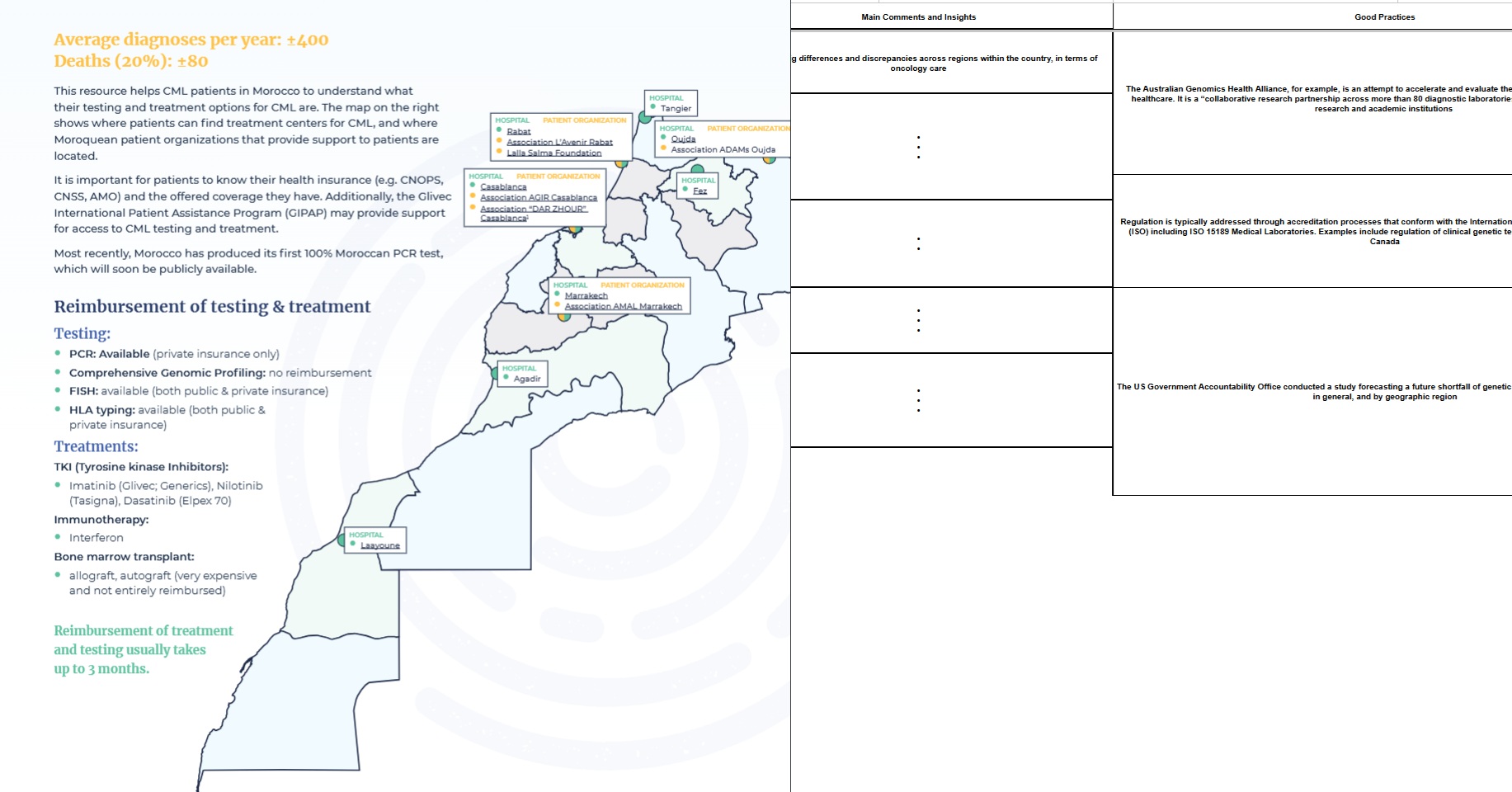
The Country & Condition Cards give you a country-level snapshot of reimbursement, testing infrastructure, and health system type — the core evidence base for this step.
FORMAT: Synapse resource page (opens in a new tab)
Optional add-on: want to bring in patient stories and access barriers too? Use the Patient Access Cause-Effect Barrier Canvas →
Patient Access Cause-Effect Barrier Canvas
The challenges in making Precision Medicine (PM) more accessible to patients are complex and interconnected. To be able to design the right solutions and make sustainable impact, we need to understand the access barriers experienced by different stakeholders at every step of the patient pathway.
This skeleton "canvas" aims to help identify the patient pathway in a given condition and/or geography, the barriers faced by different stakeholders at each step in the pathway, the root causes to these barriers, and good practices and potential solutions to these barriers.
How to complete the access assessment
Follow these steps to build an evidence-based picture of PM access in your country and disease area, using the Country & Condition Cards as your primary tool.
Download the Step 01 How-To Guide (PDF)Open the Country & Condition Cards Template
Access the tool and review the identified priority criteria that advocates and patients typically look for.
Research the current status of reimbursement and when testing is offered
Conduct a research on the current status of reimbursement and testing. Based on the template, introduce the information to create a summary of the access situation.
Look for Molecular Tumor Boards and Comprehensive Cancer Centers
Create a snapshot to showcase whether these exist in your country — this gives your audience a quick read on the infrastructure available to support precision medicine.
Identify your country's Health System Type
Conduct an analysis and use the template to showcase the first indication of health system type
Map the patient journey and access barriers
If you want to strengthen your case with real-world narrative, use the Patient Access Cause-Effect Barrier Canvas to capture patient stories and concrete access barriers alongside your data.
Pull together your Country Access Snapshot and Priority Areas for Action
Combine your findings into a short summary — this becomes the evidence base you carry forward into Steps 02 through 05.
Additional resources that inspired the co-creation of this step and its tools
Additional Resources
Explore additional resources created by real-world advocates, to help you in your access assessment
How was this step?
How likely are you to recommend this step of the Advocacy Roadmap to a colleague or fellow advocate?
Thanks for your feedback, it helps us improve.